

.NET
The .NET LTS SDK and runtime on Linux, with the ASP.NET Core hosting bundle and a systemd service template ready.
WIEWAVE has already published 3,500+ virtual machine images and application offers across the Azure, AWS and Google Cloud marketplaces — across every major Linux distribution. Browse the live catalog below, or tell us what you need and we'll build it.

A RHEL image isn't an Ubuntu image with different packages. We build to each distribution's own provisioning model, package manager and security tooling — which is why the images behave correctly once they're deployed.
LTS and interim releases, Minimal and Pro variants, built to Canonical's cloud-image conventions.
Stable and oldstable, with backports where a workload needs a newer runtime than the release ships.
RHEL 8 and 9 images, including BYOS and pay-as-you-go licensing models on each marketplace.
The 1:1 RHEL-compatible rebuild, and the default landing spot for teams migrating off CentOS Linux.
Enterprise-grade RHEL compatibility with a community governance model, on 8 and 9 streams.
Leap and Tumbleweed images with zypper-native provisioning and SUSE-consistent defaults.
CentOS Stream images, plus migration paths off end-of-life CentOS Linux 7 and 8.
Windows Server 2019, 2022 and 2025 images for stacks that need a Microsoft base.
musl-based and tiny, for container hosts and appliances where image size is the constraint.
The offensive-security toolchain pre-installed, for authorised penetration testing and red-team work.
Alpine, Oracle Linux, Fedora, a hardened internal derivative — if it boots in the cloud, we can package and publish it.
A look at 1,235 of the products we've published — a representative sample of the 3,500+ live listings across Azure, AWS and Google Cloud Marketplace, filterable by category and searchable by product, distribution or cloud. If a search comes up empty, that's a build request — not a dead end.
Showing 1–20 of 1,235 products
The .NET LTS SDK and runtime on Linux, with the ASP.NET Core hosting bundle and a systemd service template ready.
Microsoft's open-source software development kit for building, compiling, and running C#, F#, and VB.NET applications.
A web-based Linux server management panel for deploying websites, containers, and databases through a browser dashboard.
A self-hosted two-factor authentication token manager that stores and generates TOTP and HOTP codes through a web interface.
A free web-based hosting control panel for managing Linux servers, websites, databases, and FTP accounts.
An open-source PHP shopping cart platform for building and running online storefronts.
A tool that automates ACME protocol challenges to obtain and renew Let's Encrypt SSL/TLS certificates.
A Windows Server domain controller that provides centralised identity, authentication, and Group Policy management.
A development tool package related to the Ada programming language ecosystem; exact functionality is unclear from the name alone.
A self-hosted email alias and forwarding service, formerly AnonAddy, that lets users create anonymous addresses to protect their real inbox.
A network-wide DNS server that blocks ads, trackers, and malicious domains for every connected device.
A lightweight single-file PHP database management tool supporting MySQL, PostgreSQL, SQLite, and other engines through a web UI.
A distributed NoSQL key-value database engineered for high-throughput, low-latency real-time applications.
A multi-model graph database built on PostgreSQL that supports both relational SQL and Cypher-style graph queries.
A development environment preconfigured with LangChain and LangFlow for building and visually prototyping LLM-powered applications.
An open-source toolkit with metrics and algorithms for detecting and mitigating bias in machine learning models.
A web application that uses AI-based image segmentation to automatically remove backgrounds from uploaded photos.
A tool for converting images between formats with possible AI-assisted enhancement; the exact feature set is unclear.
A machine learning application that adjusts product prices in real time based on demand, competition, and other signals.
A development environment bundling Python, Jupyter notebooks, and common machine learning libraries for data science work.
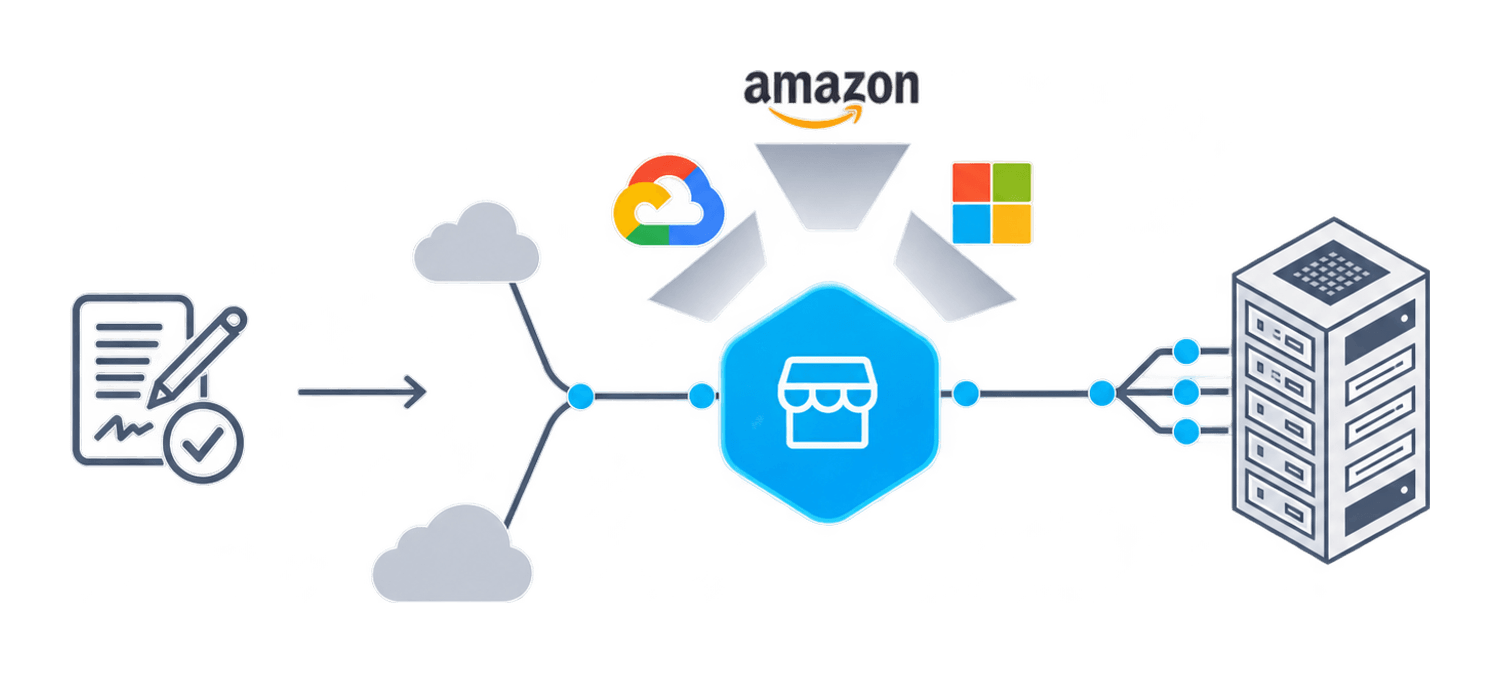
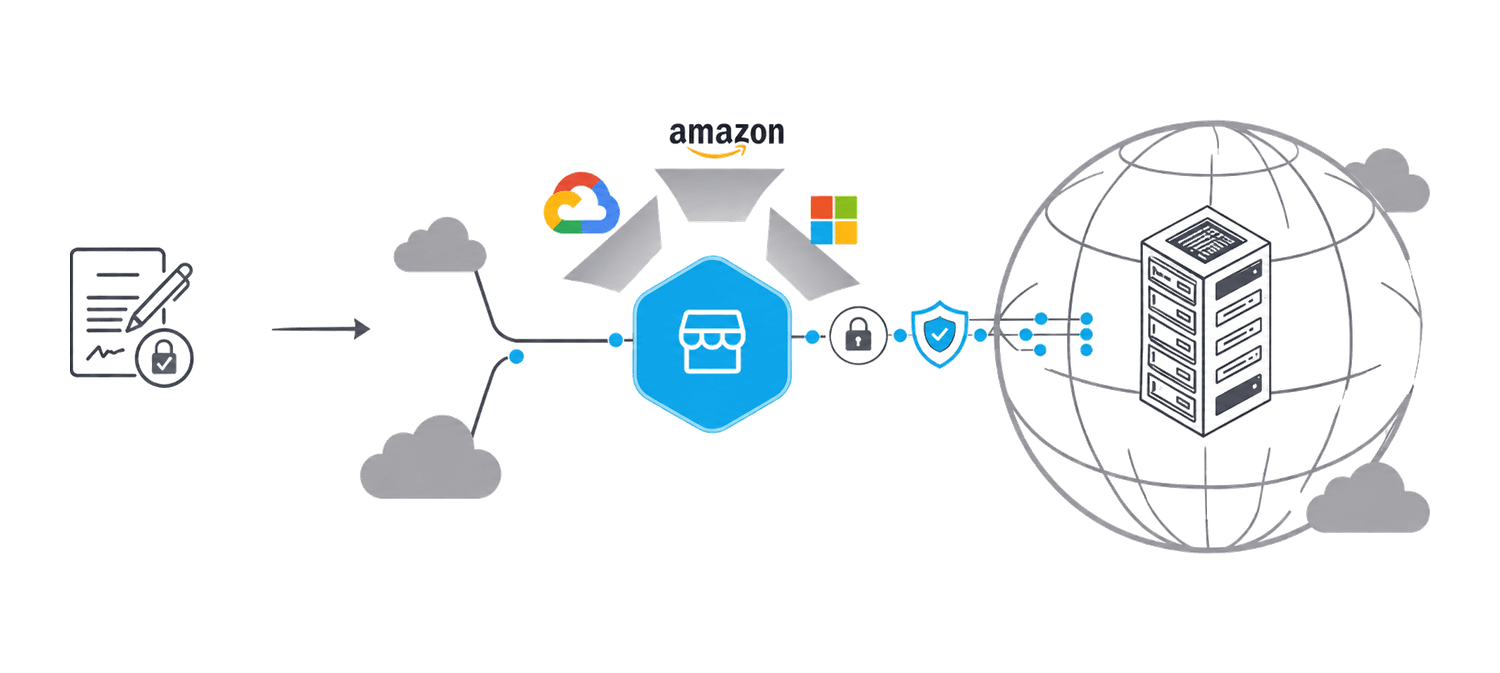
Not every deal belongs in a public catalog. We publish both today, across all three clouds, and can move a product between them as the commercial model changes.

Listed openly on the marketplace, discoverable by every customer on that cloud and transactable through their existing billing account. We handle the listing content, the pricing model, the legal artefacts and the certification cycle end to end.

The same image, published to a named customer or tenant only, at negotiated pricing and terms. This is how most enterprise procurement actually happens — the listing exists, but only the intended buyer can see and transact it.
Name the product and the distribution. We'll build the image, harden it, take it through certification, and publish it as a public listing or a private offer scoped to your customers.
Getting an image to boot is the easy part. Certification, licensing, metering, regional replication and the maintenance cadence are where marketplace listings usually stall.

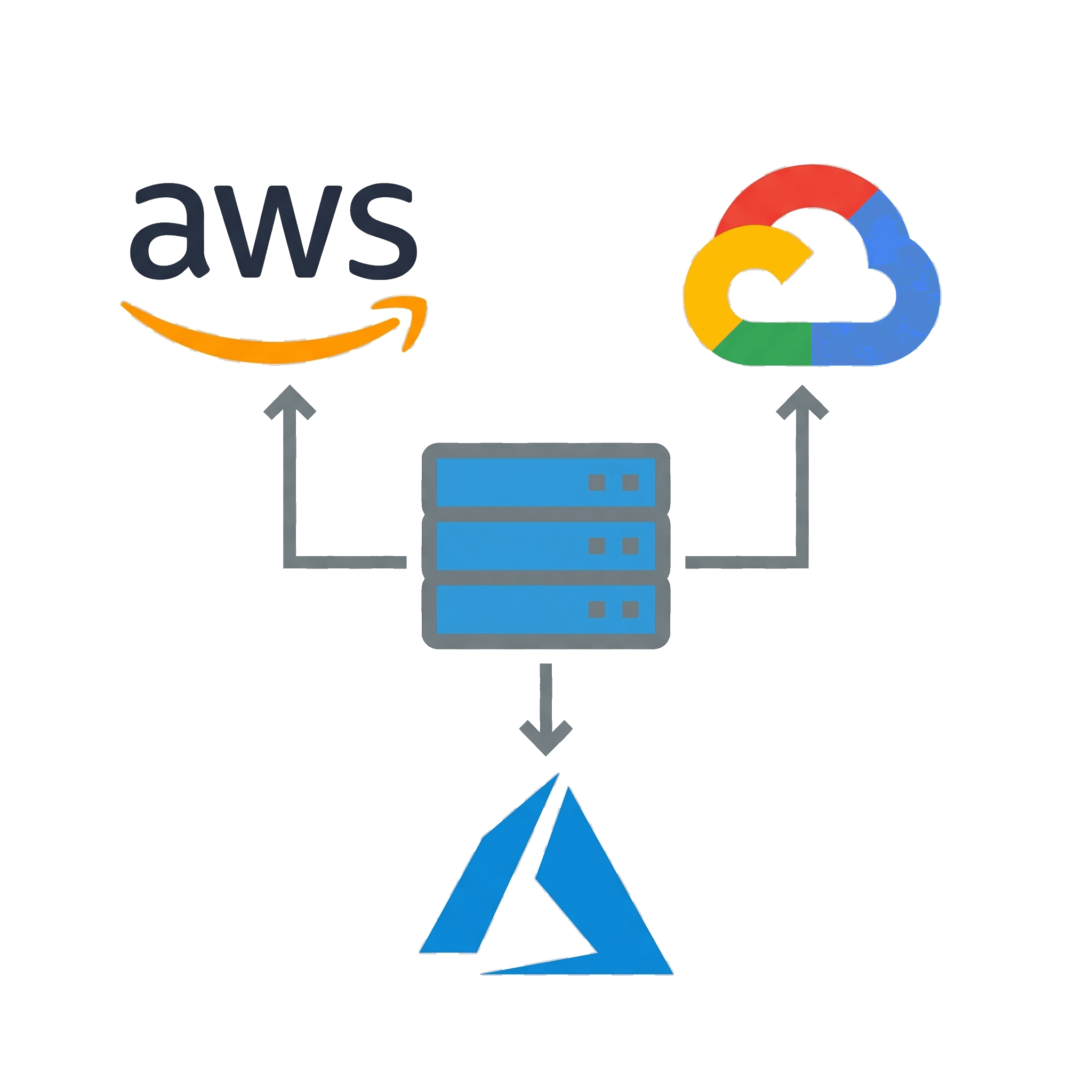
Azure managed images and VHDs, AWS AMIs with cross-region replication, and Google Compute Engine images — built from one source definition, not three drifting ones.

NVIDIA driver, CUDA and framework versions pinned to combinations we've actually booted and tested together, so an ML image works on the instance type it claims to.

CIS Level 1 and Level 2 profiles, SELinux or AppArmor left enforcing, OpenSCAP and Trivy scan results shipped with the offer rather than promised.

Container images, Helm-based Kubernetes app offers and managed application templates, for products that don't belong on a single VM.

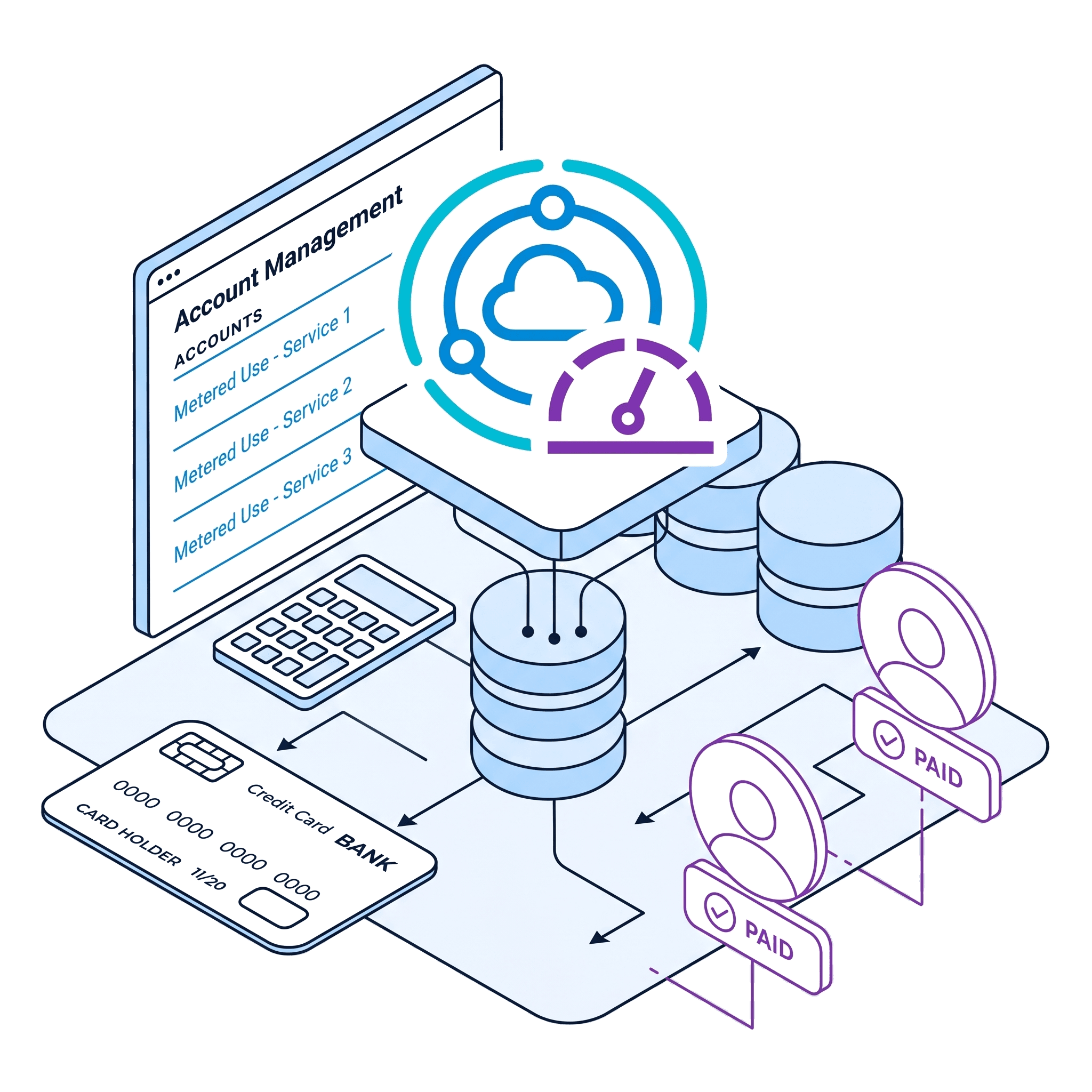
SaaS fulfilment APIs, custom metering dimensions and usage-based pricing wired up so the offer bills the way the commercial model says it should.

Regional replication, per-geography availability rules and tenant-scoped plans configured so an offer reaches exactly the customers it's meant to.
The same four steps behind every offer we've published — including the 3,500+ already live across Azure, AWS and Google Cloud — a defined, repeatable process instead of guesswork.
01We agree the product, the distributions it needs to run on, the licensing model and which marketplaces it's going to. Most of the risk in a marketplace listing is decided here, not at build time.
02The image is built from scratch as code — Packer templates, Ansible provisioning, a pinned package set. Then it gets hardened, scanned, and checked against the CIS benchmark for its distribution.
03We take the offer through each cloud's certification pipeline — Partner Center for Azure, the Management Portal for AWS, the Producer Portal for Google Cloud — including the listing copy, screenshots and support policy.
04Images don't stay current on their own. We rebuild on the upstream security cadence, re-certify, and retire old versions so your customers are never deploying a CVE from last quarter.
If yours isn't here, ask us directly — we'll give you a straight answer before there's a contract in play.
Whether it's one hardened image or a catalogue of five hundred, we'll scope it, build it, certify it and keep it published.